Thursday, July 31, 2014

Statistics Post 2

Interpreting Data From Articles/Table and Graphs
A skill that we all need in modern day life is to avoid being tricked.  Often people that are selling products or ideas will try and trick you using Statistics. 


Advertisers know that the typical consumer (that's you and me) can get tricked.  The more complicated the data the trickier it gets. 

With the election campaign happening every three years in New Zealand it is very common for politicians to try and trick voters...

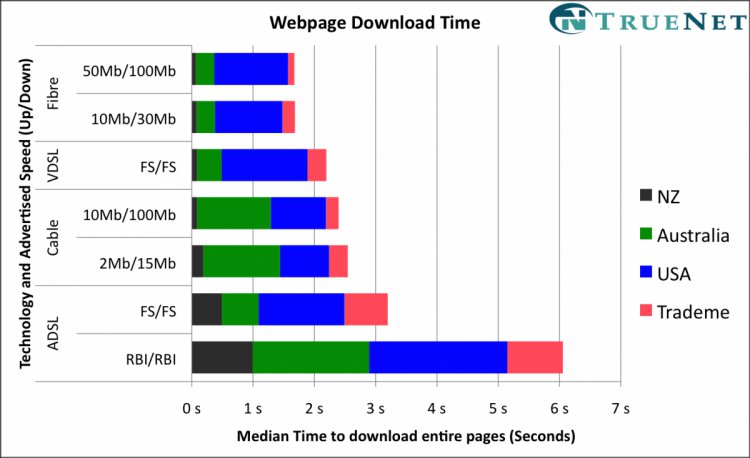
Take some time to look at this graph.  Can you see what is not right about this?  What was trying to be achieved here?  Who do you think created this graph/advertisement?


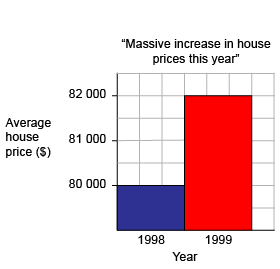
Here is another... this shows you how complicated data can hide some silly ideas.  Can you see the trick here?


Now we can work from the textbook - page 392 to 394 this is on reading data tables or some pie graphs. 

Statistics Post 1

Intro to Statistics
Statistics is the most vital of all the areas of Mathematics (most students that do senior maths do it in Statistics).  Statistics is the most common paper taken at Universities in NZ (compulsory for Law, Business, Architecture, Medicine, Marketing degrees). 

It is a relatively new piece of mathematics (grown with the use of computers – especially spread sheets).  This is because computers can 'crunch' heaps of numbers.  Imagine trying to add up manually the weights of every student here at Waihi College - it would literally take hours.


Medicine – statistics have helped us find causes (and often cures) for diseases.  e.g. the trend of death for smokers.  Here is an advert that was used when smoking companies tried to say smoking was good for your health. 
 
Sometimes statistics can trick us into wrong thinking about the relationships between (hard to prove scientifically) driving seatbelts and death.  See if you take 100 road deaths probably 90 of them would have their seatbelts on.  It would be wrong to assume seatbelt were the cause.  
 
We have to start somewhere and in Statistics we start with the actual numbers.  Mathematicians give a name to numbers "Data".  Data is not as easy as we think.   
There are two main types of data -
  1. Counted data (discrete data) these are always whole numbers (no decimals).  Say if I asked how many times a group of people went to the movies last year - I would expect to get answer like "none", "five", "three" etc... I shouldn't expect to get an answer like "two and a quarter (2.25)".
  2. Measured data (continuous data) these are when we do get decimals.  Say if I asked how many minutes was your last phone call - I would expect answers like "three and a half" or "ten minutes and twenty seconds" etc. 


Wednesday, July 23, 2014

Geometry Angles Post 10

Three Dimensional Shapes
It is a real talent to see/draw 3D shapes on a flat piece of paper. 
This years course is about your ability to name the main 3D shapes.

Here are the main types of 3D shapes that we can name the most common shapes.

The shapes in order are...
  1. Sphere (note a half a sphere is called a 'hemisphere').
  2. Pyramid (note this is a triangle based pyramid).
  3. Cuboid (it is mathematically incorrect to say 'box').
  4. Cylinder
  5. Cube
  6. Cone.


Tuesday, July 22, 2014

Geometry Angles Post 9

Angles on Parallel Lines
Parallel lines are lines that never cross because they are travelling in the same direction.  We use
arrows on the lines to represent parallel lines. 

railway lines never touch

Perpendicular lines cross at 90 degrees (not needed but interesting).

Parallel lines are particularly good at creating interesting math problems especially when they combine with our previous geometry rules (angles inside triangles, angles at a point, angles on a straight line or vertically opposite angles are equal). 


parallel lines

The main ways that angles can form on parallel lines is if we have a line that crosses over the parallel lines (a transversal).  Then we can form the three main types of angles on parallel lines...
  1. Corresponding Angles (are equal),
  2. Co-interior Angles (add to 180), and,
  3. Alternative Angles (are equal).
Builders and architects especially need to be good with angles on parallel lines...


See all the parallel lines.
 

The work for angles on straight lines can be found on pages 253 - 272 Exercises 18.1 to 18.7. 


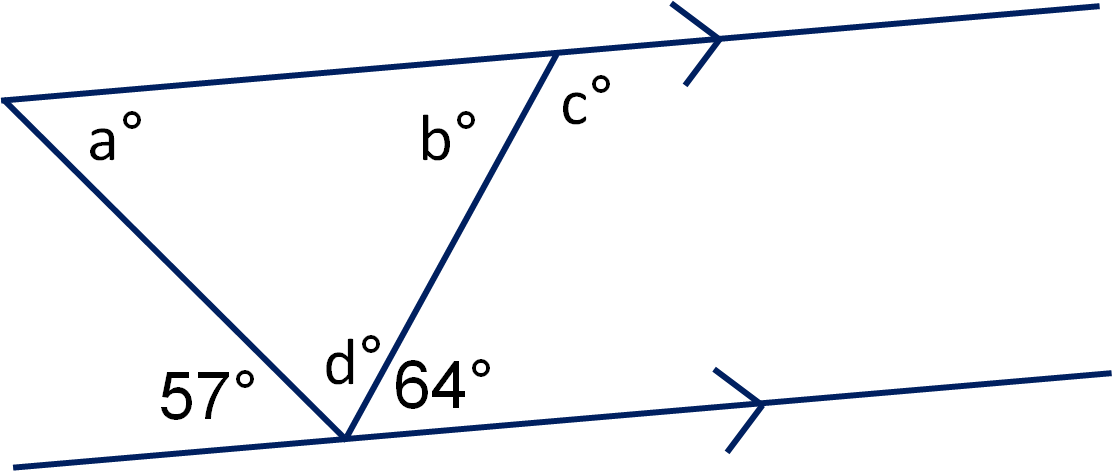
Can you see how each of the angles a, b, c, and d can be calculated using our geometry rules?  

Geometry Angles Post 8

Parts of A Circle.
One of the most important shapes in geometry is that of a circle.  It is used in mechanics and engineering (links in with algebra and trigonometry/study of triangles). 

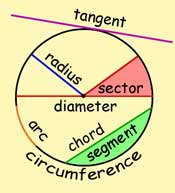
At this stage of learning you just have to know all the names of parts of a circle. 

They are...
  1. Radius - bone from elbow
  2. Tangent - road on a tyre
  3. Diameter - diaphragm through your middle
  4. Chord - guitar string across the hole
  5. Arc - the bottom of a boat (ark)
  6. Circumference - circle made from circumference
  7. Sector - area made from radius'
  8. Segment - area made from a chord (segment of music)

Geometry Angles Checklist

Summary of Learning
These are the things that we've learnt thus far...
  1. Names of Polygons (triangles, quadrilaterals, pentagon, hexagon, heptagon, octagon, nonagon and decagon).
  2. Names of Triangles (right angle, equilateral, isosceles, and scalene).
  3. Names of Angles (acute, right, obtuse and reflex).
  4. Angles at a Point (add to 360).
  5. Vertically Opposite Angles (are equal).
  6. Angles on a Straight Line (add to 180).
  7. Interior Angles on a Triangle (add to 180).

These are the things left to learn...
  1. Names of Parts of Circles.
  2. Names of 3d Shapes.
  3. Angles on Parallel Lines.

This means that we can start to prep up for an assessment (mini topic means smaller test) next week.


Monday, July 21, 2014

Geometry Games

Here are some basic maths games I've found online that work on your angles knowledge...

The first one is basic but quite hard... my score was six out of ten.
http://www.mathplayground.com/alienangles.html


This one has a story that goes with it space rangers...
http://www.bbc.co.uk/bitesize/ks2/maths/shape_space/angles/play/


This one is a two player game where you try to hit each other with bananas
http://www.hqprimary.co.uk/gorilla/


This one is called Angle Kung Fu
http://www.bbc.co.uk/keyskills/flash/kfa/kfa.shtml


This one is two player game based on the game show jeopardy
http://www.math-play.com/Angles-Jeopardy/Classifying-Angles-Game.html


Enjoy - hit the reply button to give me some web addresses of other cool maths games.